Cryptic on Building Worlds
The producer and sound designer on world building, embracing the chaos, leaving room for the artist, and why imperfection is what makes a record last.
Edition 002
·

Introduction
Cryptic treats every release as its own universe, shaping the music, artwork and atmosphere as one. That approach has led to work with Snotty Nose Rez Kids and Tory Lanez, while inspiring the lessons he shares through Sound Scientist Academy.
In this conversation, Cryptic discusses balancing chaos and silence, drawing from Nolan and Ghibli, leaving room for the artist, and why small imperfections are what make a record stay with you.
You produce, design your own sounds, and build visuals around your releases. How do you manage and balance all of those parts of your creative life?
it’s all about finding the right balance. sometimes it’s good to embrace the chaos, sometimes it’s good to embrace silence. i think it’s important to not stress yourself or let your surroundings influence the way you do things, just do it at your own timing and speed and you’ll be good.
whenever i’m working on a new kit or release it’s pretty chaotic, to be honest, because i’m working on sound design, visuals, marketing, etc. all at the same time. but i feel like it’s important to let the creativity take over you and just do whatever feels right. i always tried to build a schedule but i noticed that doesn’t really work for me, so i’m just taking it day by day and setting weekly goals. there is an app called “forest” that i started using, which lets you set a timer for a custom time and i use that to focus on something without any distractions. this helped me a lot to be more productive, it also lets you plant virtual trees so you can actually see the progress you’ve made which is pretty nice.
also taking days off where you don’t do any music or business related things is super important. in this day & age it often feels like we need to be working 24/7 because of comparison on social media but that just gives me anxiety and burnouts, it’s totally okay to take breaks and refresh your mind.
What inspired you to start making your own kits and how does that contribute to your own productions?
it all started back in 2019 just for funsies honestly. the first couple kits were horrible when i’m looking back but it made me realize that i love to create worlds around it. for me it was a way on how to express myself creatively, like an album is for an artist.
i’m still seeing it the same way, everything about the release from the artwork, to the visuals to how to present it to the world should be cohesive and speak one language. it shaped the way i view the world even if that sounds corny, but it gave me the ability to see the bigger picture when it comes to world building.
i’ve been using my own sounds in almost every production. since i did a lot of different styles and genres i built a catalog of sounds — colors — that i can use to paint any audio canvas.
“Everything about a release should speak one language.”
Your artwork and visual direction feel just as intentional as the sounds. Where does that visual inspiration usually come from?
i think it’s a lot of different things i draw inspiration from. i’m super inspired by movies, especially christopher nolan movies inspired me a lot. lately i’ve been also watching a lot of studio ghibli, which you can also probably hear in my music.
otherwise a lot comes from things i see on the daily basis, there are so many cool details in our world — you just gotta pay attention to it. i’m paying a lot of attention to colors and how they interact with each other. i’m still not where i wanna be with my visuals so i’m still learning, but we’ll get there haha.
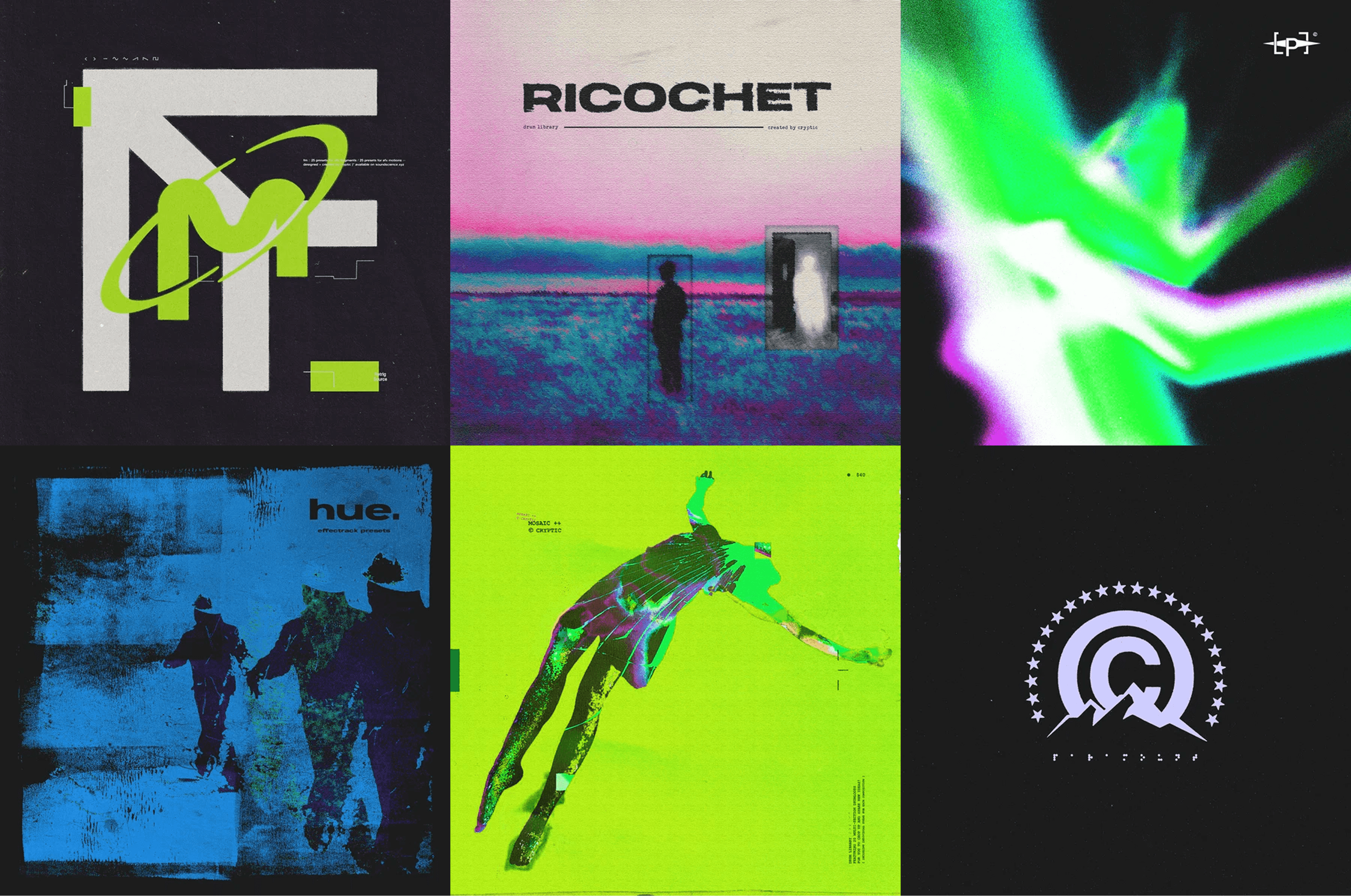
A selection of sample packs and drum kits created by Cryptic.
What do you think a beat needs in order to make an artist or songwriter want to write to it?
mainly: spark inspiration and make them feel something. whenever i’m making music it has to transport me somewhere. i feel like my music always creates a scene or world that you can see on your inner eye when you’re listening to it, at least it does it for me.
you also got to leave room for the artists. what i’ve been doing is to give them a full composition or beat, record vocals and then strip away everything and see what the song really needs. most of the time we, as producers, tend to overdo the production so that helped me a lot. most important is still the feeling — if it’s not there, there is nothing to write about.
When making ideas and beats, how do you know something is ready to be shared or played for another artist?
i think it’s ready whenever i don’t know what to add anymore. it’s important to leave room for the artists so they can do their thing — you can always add stuff after the vocals got recorded and see what the record might need. the job of a producer is to create a glove for a hand, but you gotta get the idea out there first.
“A producer’s job is to create a glove for a hand.”
What are a few tools you use every day that are indispensable to your process?
i love using the voice memos app on my phone to record sounds and ambiences. that way i can always add sounds to my productions that no one else has.
When you’re collaborating with an artist, songwriter, or producer, what do you look for in that creative connection? What draws you in?
authenticity is the most important in my opinion. when i’m working with people i’m always looking for something i haven’t heard yet. every song, beat or sample needs to tell a story.
i like when artists know how to produce as well, so we can speak the same language in the studio, to get the results wanted. whenever i’m working with other producers i’m trying to work with people who can do stuff that i can’t do.
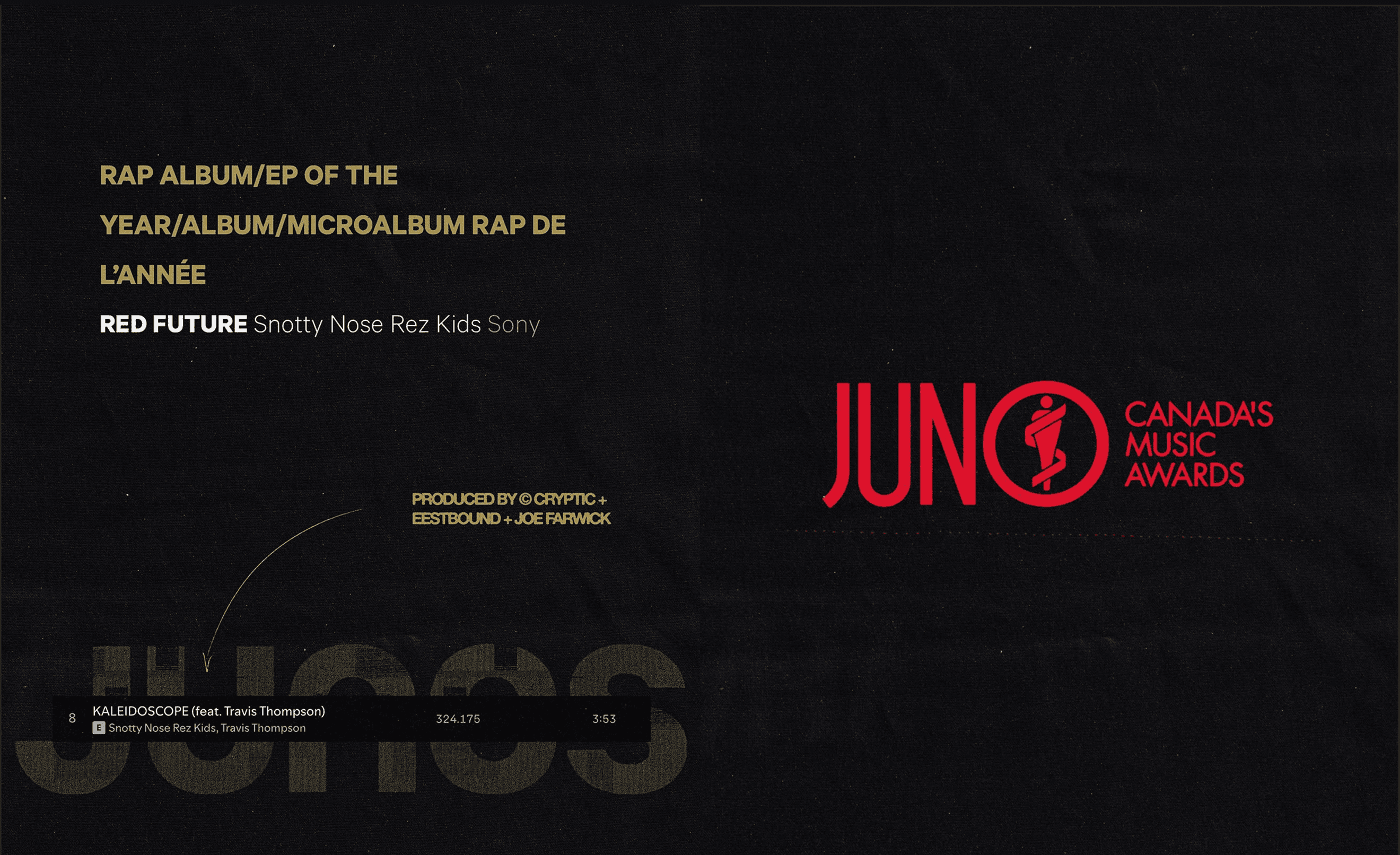
Red Future by Snotty Nose Rez Kids won Rap Album/EP of the Year at the JUNO Awards. Cryptic co-produced “Kaleidoscope” with Eestbound and Joe Farwick.
A lot of producers feel pressure to make, post, and prove themselves every day. How do you stay consistent without sacrificing taste or quality?
quality over quantity every time — don’t post just to post something. don’t feel pressured by others, just post what you think is cool on your own schedule. always remember, it’s a marathon not a sprint. even if you only post something once or twice a month, that’s still progress over a whole year, just make sure it matches your quality.
“Quality over quantity. Every time.”
What role does organization play in your process, whether you’re building kits, producing songs, or sharing ideas with collaborators?
for creating kits it’s pretty chaotic haha, i’m trying to get more organized with that. most of the time i’m just creating one big folder on my desktop where i’m saving everything — sound ideas, final sounds, visuals, notes — then slowly building the world i want to create.
for songs i have a folder for every artist i’m working with, containing project files, packs and stems. to organize my beats and samples i’m using monthly folders where i’m saving all project files, stems and bounces. i also have another folder for send outs, which includes custom packs (labeled with names and dates) plus general packs i’m sending out to all the people i’m working with, labeled by date.
For producers working remotely and trying to build their own brand and also collaborate with others, what advice would you give them?
get your music out there by posting on social media, don’t overthink it too much at first. it can be a simple screen recording of your DAW playing your beats and samples, just show it to the world. also use zoom / muse to collaborate with others. you don’t gotta live in a bigger city to make things happen, find your own way on how to get your music out there. social media is a great tool for that.
“Little imperfections make a good production great.”
What do you think separates a good production from something that can stand the test of time?
for me it has to create a feeling, a scene. it can be a great production on the technical side but if there is no emotion and human touch in it, it’ll be forgotten. little imperfections make a good production great, the best songs are songs you’re creating memories to.
that’s why i love certain songs from the 80s so much. i listened to them when i was a child together with my dad and they created some lovely memories. most of these songs are not “perfectly” produced but they’re having an emotion that makes you remember them forever.
“traklist really makes organization as a producer much easier, keeping tra(c)k of your samples, beats & projects that way is truly a gamechanger. the customization options, lossless audio quality and seeing who listened to your music makes it the perfect app for creatives.”