Audio Anthem on Serving the Record
The Grammy-winning producer and founder of The Crate League on taste, restraint, organization, and building music that lasts.
Edition 001
·

Introduction
Rafeal “Audio Anthem” Brown has spent his career working at both ends of a record: creating the spark and refining the final sound. The Grammy-winning producer, musician, and mastering engineer has contributed to music by Nas, Big Sean, Cordae, Killer Mike, and others, while building The Crate League into one of the most trusted sample libraries in modern production.
In this conversation, Anthem discusses taste, restraint, creative discipline, and why building a lasting career requires more than chasing the next placement.
You’ve built a career across music production, sample creation, musicianship, and mastering. How do you balance those different roles while keeping them connected in your creative process?
For me, they all come from the same place: serving the record. Whether I’m producing, making samples, playing, or mastering, I’m always thinking about feel, emotion, texture, and how the listener is going to experience the music.
I don’t really look at them as separate jobs. Production teaches me how to build a record. Sample creation teaches me how to create moments that inspire other people. Mastering teaches me how to listen with discipline and understand what a song needs at the final stage. All of those roles sharpen each other.
The balance comes from knowing what hat I’m wearing in the moment. If I’m making a sample, I’m trying to leave space for another producer or artist to bring their own story to it. If I’m mastering, I’m not trying to change the record — I’m trying to bring out what’s already there and make sure it translates. It all stays connected because the goal is always the same: make the music feel undeniable.
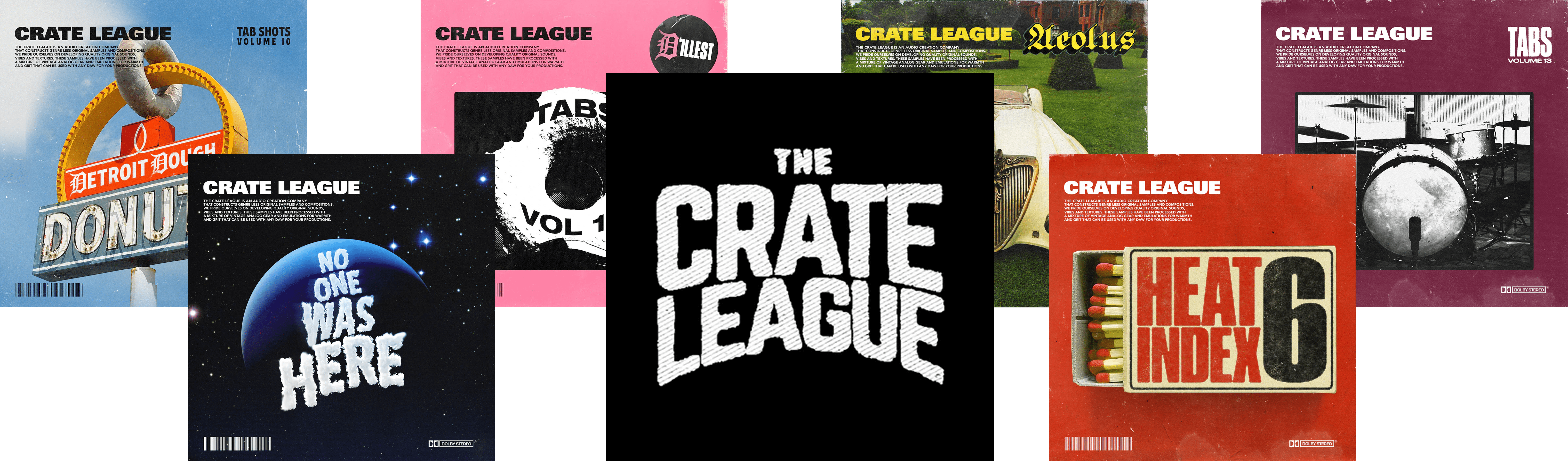
The Crate League has become a highly trusted name in a space where so many people are releasing samples and kits. What do you think helped it cut through the noise?
I think The Crate League cut through because it was never just about putting sounds in a folder. It was about creating a world and giving producers material that felt like records.
A lot of people can release samples, but the difference is taste, consistency, and trust. Producers knew that when they opened a Crate League pack, they were going to get something with feeling, musicianship, texture, and space to create. It wasn’t overproduced to the point where you couldn’t use it, but it also wasn’t generic.
I also think the brand had a strong identity. The artwork, the titles, the sound, the presentation — it all felt intentional. In a crowded space, people connect with things that feel curated and authentic. The Crate League became trusted because producers could tell there was care behind it.
When you’re creating samples versus producing full beats or songs, how does your mindset and approach shift? What changes when you’re creating something for someone else to build from versus bringing a complete vision to life?
When I’m creating samples, I’m thinking more like I’m starting a conversation. I want to create something inspiring, but I don’t want to say everything. The sample has to have emotion and character, but it also needs enough open space for someone else to flip it, chop it, add drums, or take it somewhere I wouldn’t have thought of.
When I’m producing a full beat or song, I’m thinking more about the complete picture. I’m thinking about arrangement, drums, transitions, the artist’s pocket, where the hook lands, how the energy builds, and how the record will feel from start to finish.
With samples, restraint is really important. You have to know when to stop. You’re building the spark, not always the full fire. With a full production, I’m trying to bring the whole vision to life and make sure every element supports the emotion of the record.

When you’re managing everything from samples to mastered records, what role does organization play in your process?
Organization is everything. When you’re dealing with samples, stems, masters, alternate versions, mixes, invoices, revisions, and deadlines, creativity can get messy fast if there’s no system.
For me, organization allows me to stay creative because I’m not wasting energy looking for files or trying to remember what version is final. It also helps me serve clients better. If an artist or label needs a master, instrumental, clean version, stems, or a revision, I need to be able to move quickly and confidently.
It’s not the most glamorous part of the process, but it’s one of the most important. The better the system is, the more mental space I have to actually listen, create, and make decisions. Organization protects the creative flow.
Mastering and production are often treated as separate worlds, but you’ve been able to bring both into your process at a high level. Was there a specific moment that pulled you into mastering, and how did you develop the ear and skill set for it?
Mastering pulled me in because I’ve always cared about how records feel when they leave the studio. As a producer, I would spend so much time building a track, but then I started realizing that the final stage could either elevate the emotion or take something away from it.
I became obsessed with translation — how the low end feels, how the vocal sits, how the record moves in the car, on headphones, on small speakers, everywhere. That made me want to understand mastering on a deeper level.
The ear came from years of listening, comparing, making mistakes, and being honest with myself. Mastering teaches you restraint. As a producer, sometimes you want to add. As a mastering engineer, you learn that the smallest moves can make the biggest difference. Over time, I developed an ear for what a record needs versus what I personally want to do to it. That distinction is important.

As someone with Grammy-winning credits and major placements, what do you think separates a good record from something that can really stand the test of time?
A good record can sound great in the moment, but a timeless record has emotion that people can come back to. It has something human in it.
The records that last usually have a strong feeling, a clear identity, and some kind of honesty. It could be the lyric, the performance, the melody, the groove, or even just the texture of the sound — but there has to be something that connects beyond trends.
Trends change fast. Sounds change fast. But feeling does not. When a record has the right emotion, the right performance, and the right decisions around it, it can live longer than the moment it came out in. That’s what I listen for.
“Trends change fast. Sounds change fast. But feeling does not.”
When collaborating with others, what do you look for in the creative connection? What makes you want to build with somebody?
I look for taste, work ethic, and good energy. Talent matters, of course, but the connection matters just as much. I like working with people who care about the details, but also know how to leave room for the music to breathe.
I want to build with people who are open, serious about the craft, and not afraid to try things. The best collaborations don’t feel forced. Everybody brings something to the table, but nobody is trying to overpower the record.
I also pay attention to how people communicate. Music is creative, but it’s also relationship-based. When there’s respect, trust, and shared intention, the work usually comes out better.
Was there a record, placement, or season in your career that didn’t go the way you expected, but ended up teaching you something important?
Definitely. There have been seasons where I put a lot into something and the outcome didn’t match the amount of time, energy, or expectation I had attached to it. That can be frustrating, especially when you know the quality of the work.
But those situations taught me a lot about patience, ownership, and not tying my value to one opportunity. In music, things get delayed, deals change, records don’t come out, or people don’t follow through. You have to learn how to keep moving without letting that make you bitter.
The lesson for me has been to focus on the work, protect the business side, and keep building things I own. Every situation, even the disappointing ones, can teach you how to move smarter.
For producers trying to find their lane and build a real career, not just chase the next placement, what advice would you give them?
I would tell producers to build something bigger than a placement. Placements are great, but they shouldn’t be the whole identity. You need a sound, a system, relationships, and something you can keep growing even when the industry is slow.
Find your taste. Study records. Learn arrangement. Learn how artists think. Learn the business. Learn how to deliver files correctly. Learn how to communicate. All of that matters if you want a real career.
Also, don’t just chase what’s hot. Trends can get you attention, but taste and consistency build trust. The goal should be to become someone people rely on because you bring value every time. That’s how you last.
After everything you’ve accomplished, how do you continue to learn, grow, and stay inspired, especially with how fast music technology and tools are evolving?
“Growth comes from being willing to evolve while still knowing who you are creatively.”
I stay inspired by staying curious. No matter what you’ve accomplished, there’s always more to learn. Music keeps changing, technology keeps changing, and the way people create keeps changing. I try to stay open without losing my foundation.
New tools are powerful, but I still believe taste is the most important thing. Technology can make things faster, but it can’t replace emotion, judgment, or feel. So I’m always looking at how new tools can support the creative process without letting them lead the process.
I also stay inspired by listening — not just to new music, but to old records, different genres, different textures, and the way songs make people feel. Growth comes from being willing to evolve while still knowing who you are creatively.
“I’m using Traklist as the catalog hub for Eargum, organizing tracks, stems, versions, and sync-ready ideas in one place. As the catalog grows, having a clean system makes everything easier to search, pitch, and build from.”